Introduction
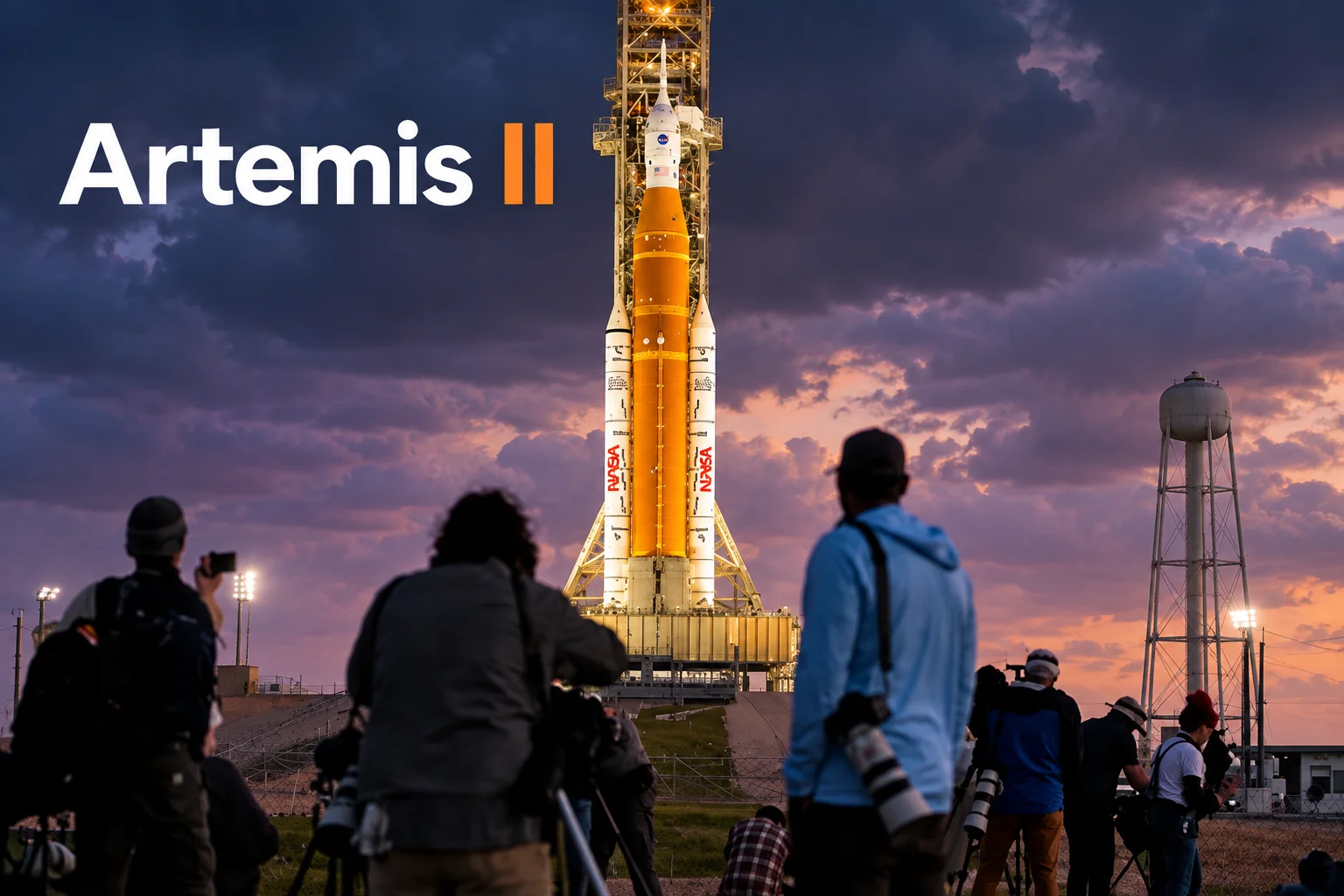
Artemis II was NASA’s first crewed mission under the Artemis program. It sent four astronauts around the Moon and safely back to Earth in April 2026.
The mission did not land astronauts on the lunar surface. Instead, it tested NASA’s Orion spacecraft, Space Launch System (SLS) rocket, life-support systems, communications, navigation, and crew operations in deep space.
This flight was an important step toward future human missions to the Moon and, eventually, Mars.
What Is Artemis II?
Artemis II was the first crewed flight of NASA’s Artemis program. The mission used the powerful SLS rocket to launch the Orion spacecraft with four astronauts aboard.
Orion traveled toward the Moon, completed a crewed lunar flyby, and then returned to Earth. Unlike some future Artemis missions, this flight was not designed to land on the Moon.
Its main purpose was to test important systems with humans on board.
When Did the Mission Launch?
Artemis II launched on April 1, 2026, from Launch Complex 39B at NASA’s Kennedy Space Center in Florida.
The launch marked a major moment for NASA. It was the first time astronauts had traveled beyond low Earth orbit as part of the Artemis program.
The SLS rocket lifted Orion into space and began the crew’s journey toward the Moon.
Who Were the Astronauts?
Four astronauts flew on the mission:
Astronaut Roles:
- Reid Wiseman: Commander, NASA
- Victor Glover: Pilot, NASA
- Christina Koch: Mission Specialist, NASA
- Jeremy Hansen: Mission Specialist, Canadian Space Agency
Reid Wiseman served as commander, while Victor Glover was the pilot. Christina Koch and Jeremy Hansen served as mission specialists.
Hansen represented the Canadian Space Agency. His participation also made the flight an important international milestone.
How Did the Mission Work?
The mission depended on several major systems working together.
Space Launch System
The SLS is NASA’s heavy-lift rocket. It provides the power needed to send Orion beyond Earth orbit and toward the Moon.
The rocket must generate enormous thrust during launch. After leaving Earth, Orion continues the journey using its own spacecraft systems.
Orion Spacecraft
Orion is designed to carry astronauts during deep-space missions. It provides living space, life support, communications, navigation, and protection during the journey.
Earlier testing was performed without astronauts. This flight allowed NASA to test the spacecraft with a real crew in deep space.
Ground Systems
Ground teams at Kennedy Space Center handled launch prep, monitoring, communications, and mission operations.
These systems are just as important as the spacecraft because a deep-space mission requires constant support from Earth.
What Happened During the Flight?
After launch, the crew completed checks of Orion’s systems before continuing toward the Moon.
The spacecraft then performed the planned journey around the lunar environment. During the trip, the astronauts monitored spacecraft systems and carried out scientific and operational activities.
One major event was the lunar flyby. Orion went behind the Moon, causing a short communication blackout. The Moon blocked the direct link to Earth.
The crew also had the opportunity to observe and photograph the lunar surface from a unique location.
A New Human Distance Record
One of the biggest achievements of Artemis II was the distance reached by its crew.
During the mission, the astronauts traveled farther from Earth than any humans had previously traveled. They passed the distance record set by the Apollo 13 crew in 1970.
The crew reached about 252,756 miles from Earth at their maximum distance.
This was more than just a new record. Astronauts can now operate modern spacecraft much farther from Earth. This is thanks to new systems made for future exploration.
How Long Did the Mission Last?
The flight lasted about nine days, one hour, and 32 minutes.
During this time, the spacecraft flew hundreds of thousands of miles in space before heading back to Earth.
The crew splashed down on April 10, 2026, completing the historic journey.
Where Did the Crew Return?
Orion splashed down in the Pacific Ocean off the coast of San Diego, California.
Recovery teams were ready to assist the astronauts after landing. The crew was then transported for medical checks and post-flight procedures.
A safe return was one of the most important goals of the mission. NASA needed to demonstrate that Orion could carry astronauts back through Earth’s atmosphere after a deep-space journey.
What Did the Mission Accomplish?
Artemis II achieved several important goals.
1. Tested Orion With Astronauts
An earlier Artemis flight tested Orion without a crew. This mission added astronauts to the spacecraft and allowed NASA to study how its systems performed during a real human spaceflight.
2. Tested SLS With a Crew
The flight was the first crewed mission using the SLS rocket. Data from the flight can help NASA improve future missions.
3. Tested Deep-Space Operations
The astronauts and ground teams gained experience operating far from Earth. This includes communication, navigation, life support, and crew procedures.
4. Completed a Crewed Lunar Flyby
The crew traveled around the Moon without landing. This demonstrated another major part of NASA’s deep-space mission plan.
5. Broke a Human Distance Record
The astronauts traveled farther from Earth than any previous human spaceflight crew.
What Did the Mission Discover?
Artemis II focused on testing technology and human spaceflight, not on landing on the Moon.
However, the crew performed observations and collected valuable information during the flight.
They photographed Earth and the Moon from deep space. They also helped NASA understand how astronauts and spacecraft systems behave during a journey far beyond low Earth orbit.
The information gathered can support the design and planning of later missions.
Why Is the Mission Important?
The importance of Artemis II goes beyond its record-breaking distance.
The mission linked lessons from the Apollo era to NASA’s current plans for ongoing human exploration.
Apollo demonstrated that humans could reach the Moon. The Artemis program is designed to build new capabilities for longer and more complex missions.
The crewed flight provided important experience before future lunar-surface missions.
It also demonstrated international cooperation through the participation of Canadian astronaut Jeremy Hansen.
Artemis I vs. Artemis II
FeatureArtemis IArtemis IICrewUncrewedFour astronautsRocketSLSSLSSpacecraftOrionOrionLunar flightYesYesHuman crewNoYesMain goalTest systemsTest systems with crewLaunch year20222026Moon landingNoNo
The first flight tested the basic system without astronauts. Artemis II took the next step by putting humans inside Orion.
What Comes Next?
The Artemis program does not end with this flight.
NASA plans to use lessons from the mission to support future lunar exploration. Later missions are expected to involve increasingly complex operations around and on the Moon.
The long-term goal is to gain experience and create technology. This will help support human exploration deeper into the solar system.
Future missions will rely on international partnerships. They will also depend on commercial companies, new spacecraft, spacesuits, and lunar infrastructure.
Frequently Asked Questions
What is Artemis II?
Artemis II was NASA’s first crewed Artemis mission. Four astronauts traveled around the Moon aboard Orion before returning safely to Earth.
Did the astronauts land on the Moon?
No. The crew completed a lunar flyby but did not land on the lunar surface.
Who flew on the mission?
Reid Wiseman, Victor Glover, Christina Koch, and Jeremy Hansen from Canada made up the four crew members.
How far did the astronauts travel?
The crew traveled about 252,756 miles from Earth. This distance broke the previous human record.
How long was the journey?
The mission lasted about nine days, one hour, and 32 minutes.
What rocket launched the spacecraft?
NASA’s Space Launch System launched Orion and its crew from Kennedy Space Center in Florida.
Where did Orion land?
The spacecraft splashed down in the Pacific Ocean near San Diego, California.
Why was the mission important?
NASA tested its deep-space systems during the flight. Astronauts gained valuable experience for future human exploration.
Final Verdict
Artemis II was a major milestone in modern human spaceflight. Four astronauts traveled around the Moon, tested deep-space systems, and returned safely to Earth.
The mission set a new human distance record. It showed what Orion and SLS can do with a crew onboard.
Its biggest value may come from what NASA learns from the flight. These lessons can guide future Moon missions. They also prepare us for longer journeys into deep space.
“Blogifi.uk is a trusted digital platform sharing useful insights on technology, AI, business, marketing, and the latest online trends.”